

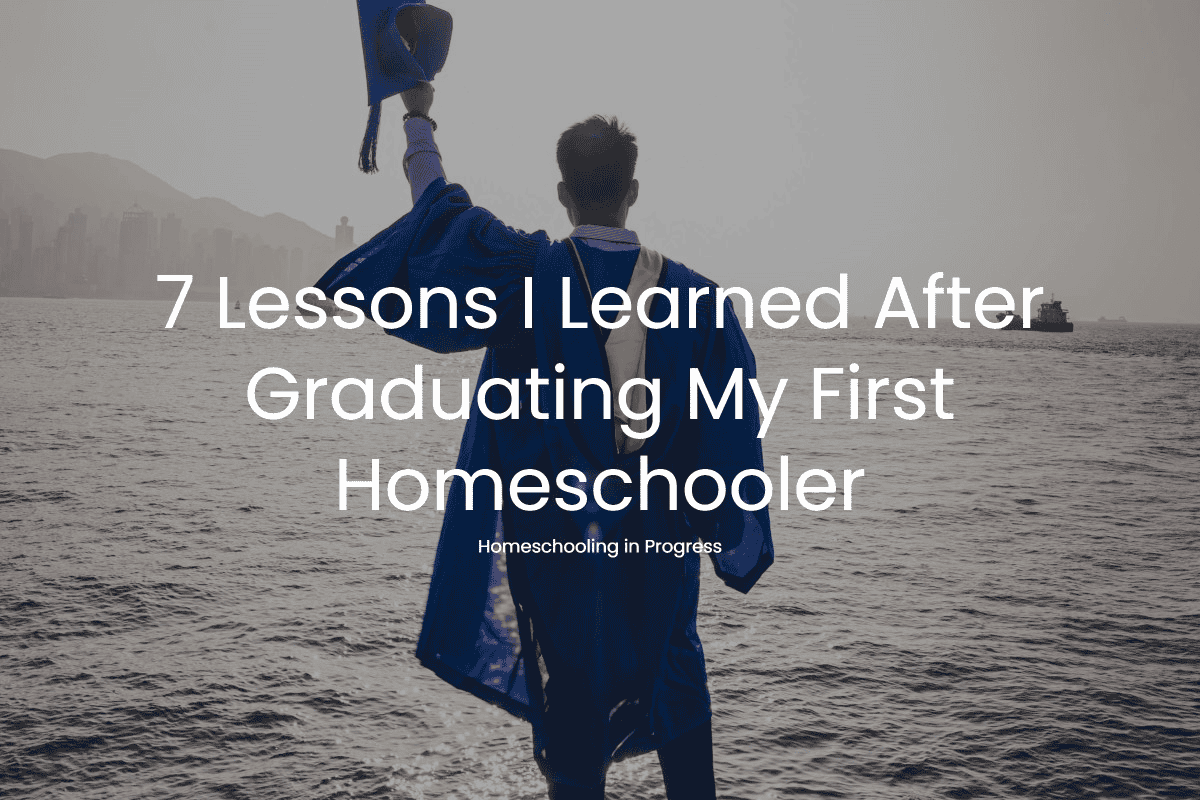
7 Lessons I Learned After Graduating My First Homeschooler
When I started homeschooling, graduation felt impossibly far away. Now that I've graduated my first homeschooler, here are seven lessons I wish I could share with my younger homeschool mom self.
This post may contain affiliate links, which means I may receive a commission, at no extra cost to you, if you make a purchase through a link. Please see my full disclosure for further information.
When I began homeschooling, graduation felt impossibly far away. Now that I've graduated my first homeschooler, I can see the journey differently—and there are lessons I wish I could share with my younger self.
If you're still in the early years and homeschooling high school feels a lifetime away, know that the years pass more quickly than you can imagine. As you walk through the ordinary days, keep your focus on what matters most. One day you'll find yourself looking back, and I hope you'll do so with gratitude for the memories you've made and the relationships you've built along the way.
7 Lessons I Learned When I Graduated My First Homeschooler
We recently completed our twelfth year of homeschooling and celebrated the graduation of our first homeschooler. When we began this journey, I had a fourth grader and a first grader who had just left our local Catholic elementary school, along with their younger preschool-aged brother.
Homeschooling was never part of my original plan. As a former Catholic elementary school teacher turned stay-at-home mom, I loved Catholic education and was grateful for the school our children attended. My husband and I fully expected our children to follow the same path we had—through Catholic elementary school and eventually on to the local Catholic high school from which we both graduated.
Yet over time, I began to sense that God was calling our family in a different direction. I prayed about it for months, wondering if I was truly hearing Him correctly. Eventually, we took a leap of faith and began homeschooling, trusting that He would guide our steps.
Looking back now, I can see how faithfully God has led us through every season. Here are seven of the biggest lessons I've learned over the past twelve years—lessons I'll continue to carry with me as I move forward in our homeschool journey.
Lesson 1: Relationships Matter Most
When I first started homeschooling, I spent a lot of time thinking about curriculum, lesson plans, schedules, and whether I was doing enough academically. Like many homeschool moms, I worried about checking all the boxes and making sure my children weren't missing anything.
Looking back after twelve years, what stands out most isn't a particular curriculum or perfectly planned school day. It's the relationships we built along the way.
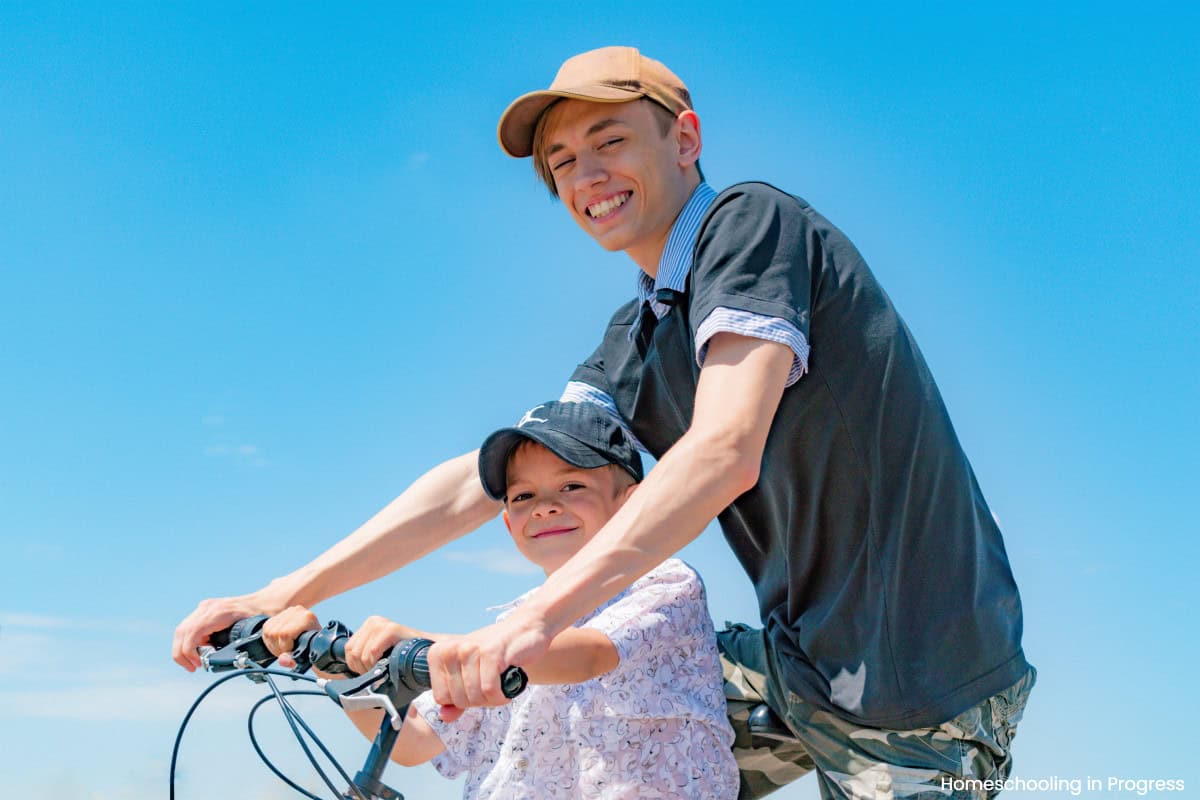
One of the greatest gifts homeschooling gave our family was the time to build a strong family culture. We shared meals, worked through challenges together, celebrated milestones, and spent countless ordinary days side by side. Those daily interactions shaped our family far more than any lesson plan ever could.
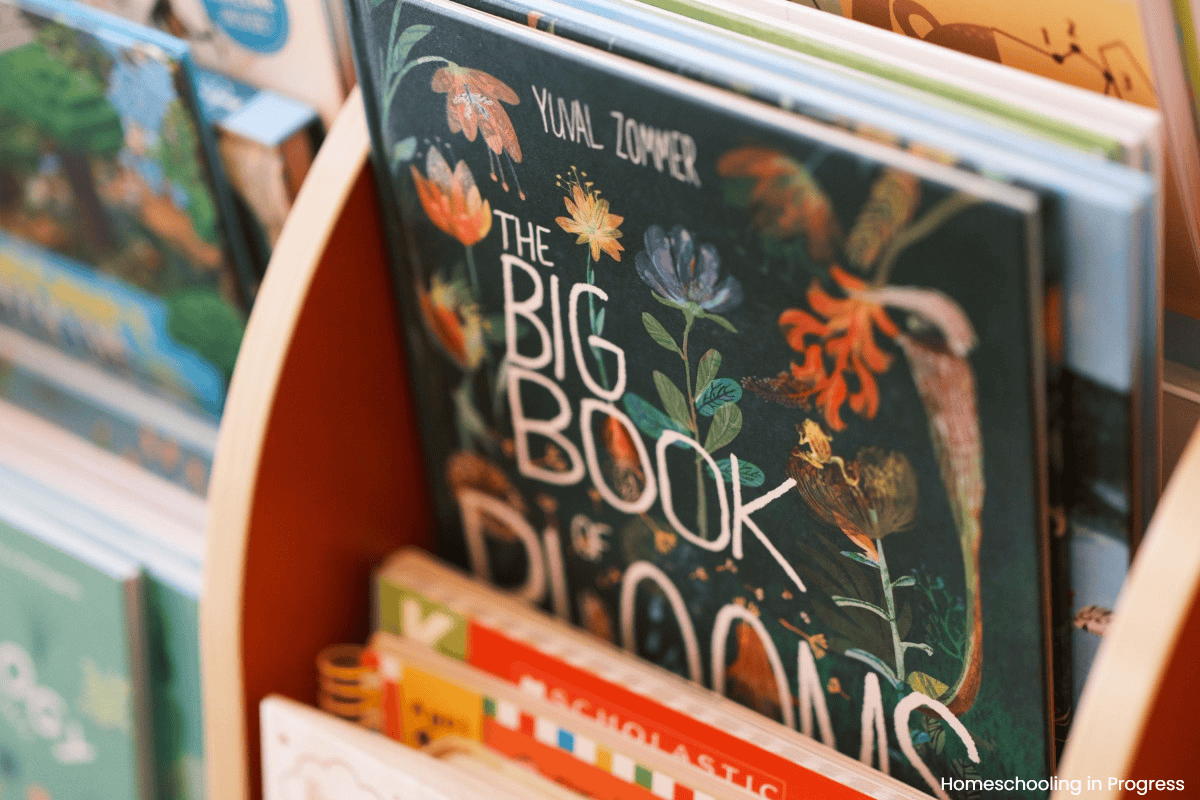
Some of my favorite homeschool memories come from our read-aloud time. The books themselves were wonderful, but what I treasure most are the moments we shared while reading them together. We laughed, cried, discussed big ideas, and entered into new stories as a family. Years later, those memories remain long after many of the academic details have faded.
Family-style learning also became one of the best decisions I made as a homeschool mom. Combining subjects whenever possible not only made my days more manageable, but it also gave my children shared experiences. They learned together, discussed ideas together, and developed bonds that might not have formed if everyone had always been working separately.
At the end of this journey, I don't remember every lesson we completed. What I remember are the conversations, the laughter, the books we shared, and the countless ordinary moments that drew us closer together. Those relationships have become one of the greatest fruits of our homeschool years.
Lesson 2: Consistency Beats Perfection
For years, I searched for the perfect curriculum.
I compared programs, read reviews, asked other homeschool moms what they liked, and spent far too much time wondering if there was a better option than the one we were currently using. Like many homeschool moms, I thought that if I could just find the perfect curriculum, everything would fall into place.
Looking back, I can see that consistency mattered far more than perfection.
The truth is that no homeschool curriculum is perfect because no child is perfect. Every child has different strengths, interests, challenges, and learning styles. What worked beautifully for one of my children didn't always work for another. Sometimes a curriculum that seemed ideal on paper simply wasn't the right fit in real life, no matter how much I tried to make it work.
What made the biggest difference wasn't finding the perfect program—it was showing up day after day and doing the work. The ordinary days mattered more than the exceptional ones. Reading together, practicing math facts, discussing ideas, writing papers, and steadily moving forward over the course of many years accomplished far more than any perfect curriculum ever could.
Some years were stronger academically than others. Some seasons felt productive and organized, while others felt like we were simply doing the best we could to get through the day. Yet learning still happened. Progress still occurred. Those small, consistent efforts added up over time.
As homeschool moms, we can be tempted to believe that every lesson needs to be memorable, every unit study needs to be hands-on, and every day needs to look like a highlight reel. But education is built in the everyday moments. Children grow and learn through thousands of ordinary lessons repeated faithfully over time.
Lesson 3: Children Grow at Their Own Pace
One of the greatest gifts of homeschooling multiple children is that it teaches you very quickly that children grow and learn at their own pace.
When I first began homeschooling, I worried far too much about whether my children were exactly where they were supposed to be academically. Like many homeschool moms, I sometimes compared their progress to grade-level expectations or wondered if they were keeping up with their peers.
Over the years, however, I noticed something remarkable. Each of my children developed differently. One child might grasp a concept quickly while another needed more time. Some subjects came naturally, while others required patience and persistence. What looked like a weakness one year often became a strength later on.
Because I was homeschooling children of different ages, I had the opportunity to see this pattern repeat itself again and again. Children mature at different rates academically, emotionally, and even spiritually. Growth is rarely as linear as we expect it to be.
I was reminded of this lesson recently with my oldest son. During his junior year, he enrolled in a dual-credit college math class. It quickly became apparent that he wasn't ready for the pace and demands of the course, and he ultimately had to withdraw. At the time, it felt disappointing. Like many parents, I wondered if we had somehow failed or made the wrong decision. Being my first time homeschooling high school, I worried that I wasn't preparing him well enough for college.
But a year later, he tried the same class again as a senior. This time, he was ready. He completed the course with an A.
The difference wasn't that he suddenly became a different student. He simply needed more time.
That experience reinforced something homeschooling had been teaching me for years: readiness matters more than arbitrary timelines. Sometimes children need additional time to mature, develop confidence, or master a skill. That isn't failure—it's simply part of their unique path.
Looking back, I'm grateful homeschooling gave us the flexibility to honor that reality. Not every child will learn the same thing at the same age, and that's okay. Growth isn't a race. Given time, patience, and encouragement, children often accomplish things we once worried they might never achieve.
Lesson 4: Faith Formation Is Never Wasted
When you're homeschooling, it can sometimes feel like there aren't enough hours in the day. There is always another math lesson to finish, another paper to write, or another subject that needs attention. In those moments, it can be tempting to wonder if the time spent on faith formation would be better used elsewhere.
After twelve years of homeschooling, I can confidently say that faith formation is never wasted.
Throughout our homeschool years, we intentionally made our Catholic faith part of our daily routine. Our mornings often began together with prayer. During morning basket, we prayed the Rosary, learned about the lives of the saints, and spent time discussing the truths of our faith. We used Catholic curriculum whenever possible and made it a priority to attend Holy Days of Obligation, even when they fell in the middle of the school day.
At times, these practices felt ordinary. There were seasons when the children were distracted during prayer, when our saint studies seemed forgotten a week later, or when I wondered whether any of it was making a lasting impact.
But faith formation is much like planting seeds. We don't always see immediate results, and we certainly can't measure spiritual growth the way we measure academic progress. Yet God is at work in ways we cannot always see.
Looking back now, I don't regret a single minute spent teaching the faith, praying together, or making room for the liturgical life of the Church within our homeschool. If anything, I wish I had worried less about covering every academic detail and trusted more in the lasting value of those spiritual investments.
As parents, we are helping to form not only minds but souls. The math facts may eventually be forgotten, and the history timelines may fade from memory, but every prayer offered together, every saint introduced, and every opportunity to encounter Christ has eternal value. Time spent leading our children closer to Him is never wasted.
Lesson 5: Homeschooling Multiple Children Gets Easier
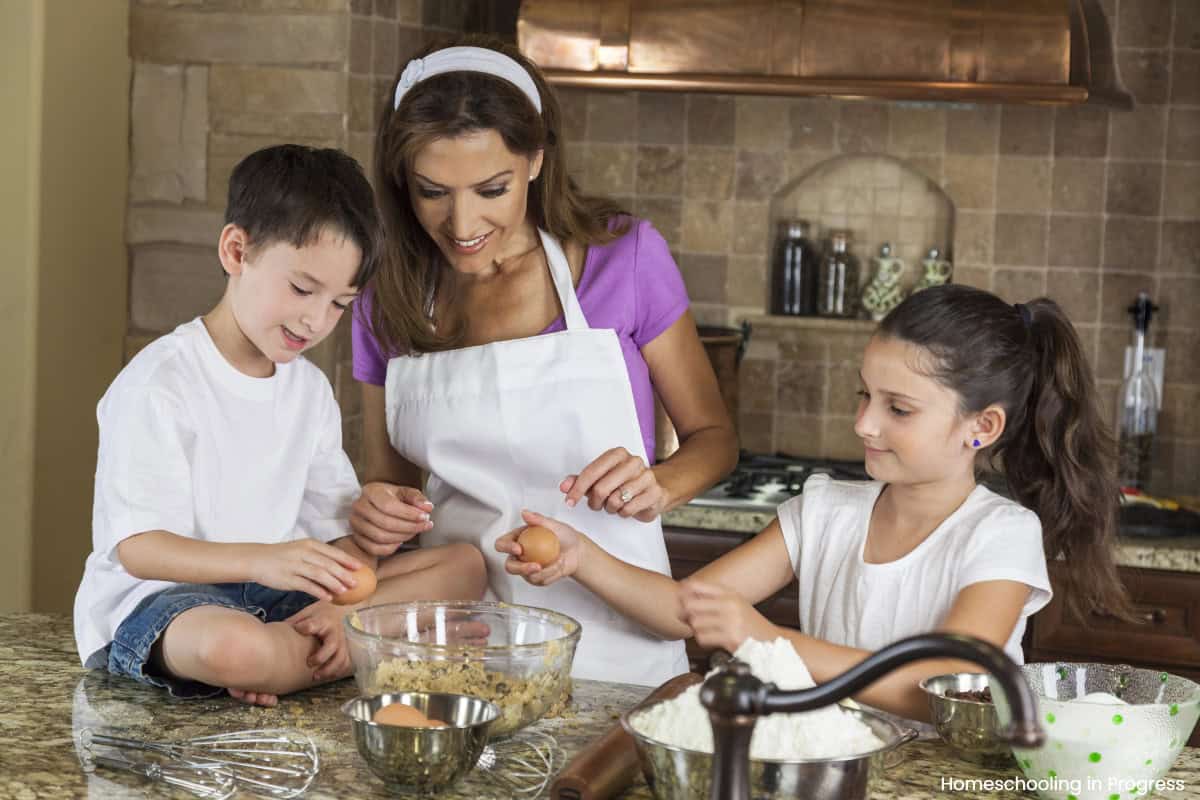
One of the most overwhelming parts of the early homeschool years was figuring out how to teach multiple children at different ages and stages. In the beginning, it often felt like I was juggling too many lessons, too many needs, and too many interruptions all at once.
There were days when I wondered how it could ever feel manageable.
What I didn't realize at the time was that homeschooling multiple ages doesn't stay in that stage of constant overwhelm forever. It gets easier—slowly, almost imperceptibly—but it does get easier.
As the years passed, I began to see patterns emerge. My older children became more independent in their schoolwork, which freed me to spend more focused time with my youngest. Subjects started to overlap more naturally. We learned to combine lessons when it made sense and simplify when it didn't. Our days developed more rhythm and less chaos.
One of the unexpected blessings was watching my older children help teach and guide the younger ones. Sometimes that looked like reading aloud together, explaining a concept, or simply modeling patience and responsibility. What once felt like a constant demand for my attention gradually became a shared family rhythm of learning.
I also learned to release the pressure of doing everything separately for each child. Not every subject needed its own elaborate plan. Not every grade needed to look completely different. Once I stopped trying to replicate a traditional classroom at home, I found more peace and more margin in our days.
Homeschooling multiple children didn't necessarily become easy in the sense of being effortless, but it did become familiar. What once felt overwhelming became part of the natural flow of our family life.
Looking back, I can see that the hardest season was not permanent—it was simply the beginning.
Lesson 6: Trust God with the Results
If there is one lesson that has taken me the longest to learn, it is this: I am not ultimately in control of the outcome.
Homeschooling has a way of revealing how little we can actually predict or manage when it comes to our children. There were many moments over the years when I had to surrender my fears and trust God in the uncertainty of each season. Times when I wondered if I was doing enough, choosing the right path, or preparing my children well for what lay ahead.
In those moments, I learned to pray differently—not just asking God to bless our efforts, but asking Him to guide what I could not see or control.
There were also seasons when my own limitations became very real. Times of weakness and fatigue due to a health issue reminded me that I was not meant to carry everything on my own strength. Those seasons became unexpected invitations to rely more deeply on God and to loosen my grip on the idea that everything depended on me.
Over time, something began to shift in me. I started to see more clearly that my children are not ultimately mine to shape or secure. They belong to God even more than they belong to me. My role is to be faithful, but the outcome is in His hands.
And when I look back now, I can see how faithfully He has worked in ways I never could have planned. There were moments of discouragement that later revealed themselves as turning points. There were closed doors that made space for better ones. There were surprises—both small and significant—that I never would have chosen, but now recognize as grace.
Trusting God with the results does not mean letting go of responsibility. It means releasing the illusion of control. It means continuing to show up, to teach, to pray, and to love—while believing that God is at work in ways that extend far beyond what I can measure or see.
In the end, homeschooling has not just been about educating my children. It has been about learning, slowly and sometimes imperfectly, to trust the One who loves them even more than I do.
Lesson 7: The Goal Was Never Graduation
Reaching graduation felt like a significant milestone. After so many years of homeschooling, there was something meaningful about arriving at that moment and looking back on the journey it took to get there.
But as I stood at that point, I realized something important: graduation was never the ultimate goal.
The goal was never simply to finish a curriculum or complete a set of academic requirements. It was never just about transcripts, credits, or preparing for college—though those things certainly matter and have their place.
The deeper goal was always to raise faithful, capable young adults who love God, understand who they are, and are prepared to live out their vocation in the world.
As I reflect on my oldest child reaching this milestone, I am genuinely grateful for the opportunity to have guided him through graduation and helped prepare him for the next step of college. Those academic accomplishments are something I do not take lightly.
But what brings me the deepest joy is not the diploma or the academic record. It is seeing the kind of young man he is becoming—his character, his growing faith, his responsibility, and the quiet ways he is stepping into adulthood.
And I see this same unfolding in each of my children in different stages and seasons. Homeschooling has never been about producing a single outcome at a single moment in time. It has been about faithfully accompanying each child as they grow into the person God created them to be.
From this perspective, graduation is not an ending so much as a threshold. It is one moment along a much longer journey of formation.
When I look back now, I understand more clearly that the real measure of these years is not found in a ceremony or a transcript, but in the formation of hearts, minds, and souls over time.
And that, more than anything else, is what I hope continues long after the homeschool years themselves are finished.

What I Would Tell My Younger Homeschool Mom Self
If I could go back and tell my younger homeschool mom self one thing, it would be this: don't sacrifice relationships in pursuit of perfection. There will always be another worksheet to finish, another assignment to complete, or another box to check. The relationships you build with your children—and the relationships they build with one another—are far more important.
I would also remind myself that a good curriculum used consistently is far better than a perfect curriculum that constantly gets replaced. The goal was never perfection. The goal was faithfulness, and faithfulness over time produces fruit.
I would tell her to breathe more deeply in the ordinary days. To stop measuring success only by what gets checked off and instead notice what is quietly being formed in the hearts of her children. To trust that the seeds planted in prayer, in conversation, in shared books, and in daily life are not lost—even when she cannot yet see the results.
Most of all, I would remind her that she is not walking this path alone, and she does not have to hold everything together perfectly for it to count. God is present in the unfinished days, the uncertain decisions, and the moments when she feels like she is falling short.
These years are not meant to be perfect. They are meant to be faithful, lived one ordinary day at a time.
And if I could offer one final encouragement to the homeschool mom reading this who feels tired, uncertain, or behind, it would be this: you are likely doing better than you think you are. Keep going. Keep showing up. Keep loving your children well.
The fruit of these years is often slow to appear, but it is real. And in the end, you may find—as I have—that what mattered most was not how perfectly you homeschooled, but how deeply you loved along the way.

If you're still at the beginning of your homeschool journey and graduation feels a lifetime away, know that these years will pass faster than you think. In the midst of lesson plans, laundry, and everyday challenges, don't lose sight of what matters most. One day you'll look back and realize that the relationships you nurtured, the faith you shared, and the time you spent together mattered far more than checking every box perfectly. Those are the things that endure long after the textbooks are closed and the diplomas are handed out.